




Catalogue ESPAÑOL

The Cheese

Produced exclusively with sheep's milk

The production of our exquisite varieties of cheese are controlled from the origin of the raw material, authentic sheep’s milk, going through the production, handling and storing. This way it exceeds the most demanding technical and health requisites. This is the only way a product with exceptional organoleptic characteristics and invariable quality can be guaranteed.

The Cheese which the customers demand and the consumers know how to appreciate.

Characteristics of
our cheeses

Characteristics of our cheeses
Master Craftsmen

The Master Craftsmen of La Antigua Quesería are the heirs of a long family tradition. Three generations dedicated to the handmade production of cheese, who have known how to adapt to the present days, preserving the essence and character of a local product that now has international prestige.

Almost a century ago, Grandfather Santiago began making his cheeses. Nowadays, the fabrication process stays very similar to the one he had those days, and has only changed to adapt to today's rigorous health and quality standards.

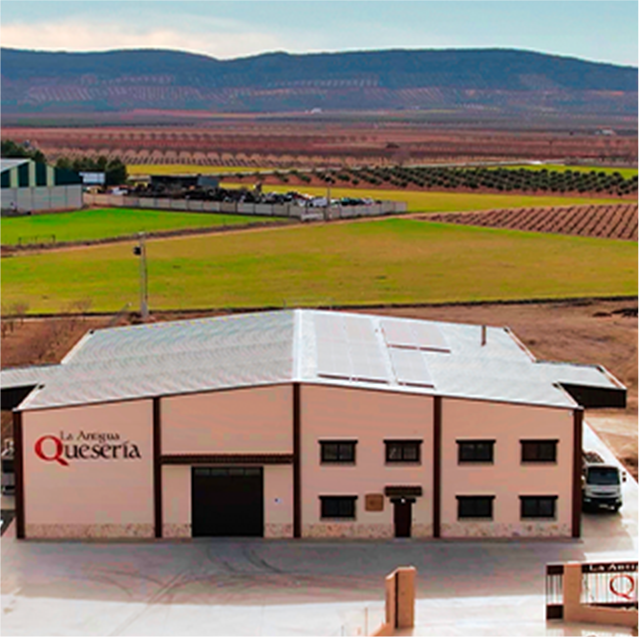
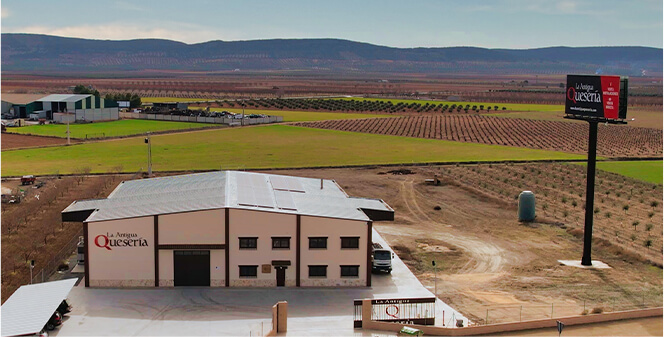
Maximum quality Cheeses, with an indisputable traditional style, which are produced under the watchful eye of our experts, in the modern installations of La Antigua Quesería in Mora (Toledo).

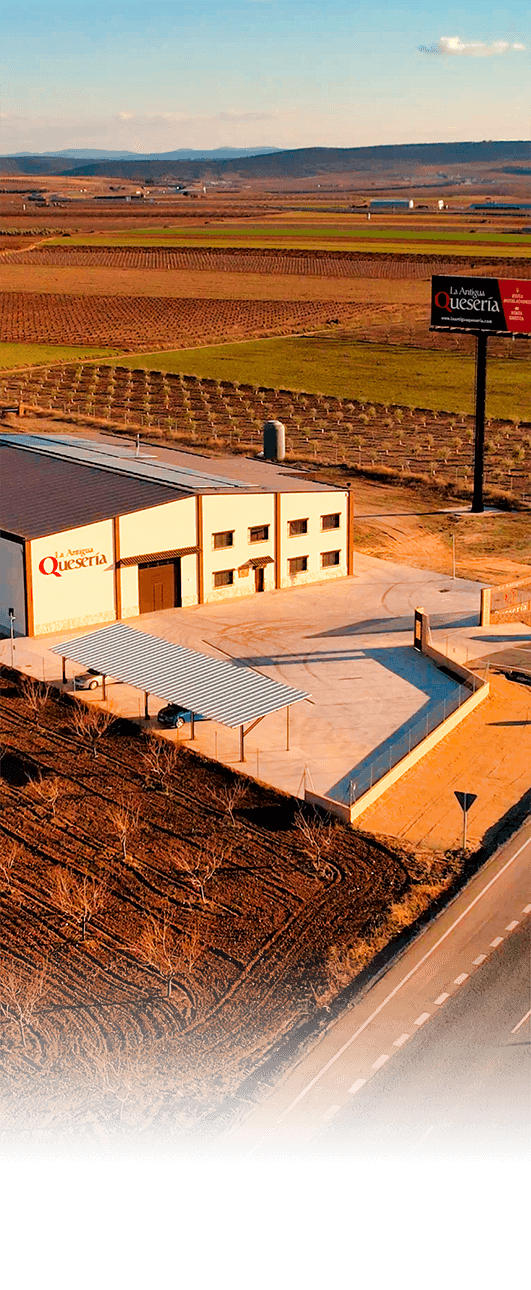
The current location in Mora, right next to “Autovía de Los Viñedos”, has the most contemporary facilities for the production of cheese with the “La Mancha Denominación de origen”. Highly innovative systerms are set up throughout its infrastructure, including photovoltaic installations and a waste reuse management, as a reflection of the company's commitment to sustainability.

Right from the inside of La Mancha

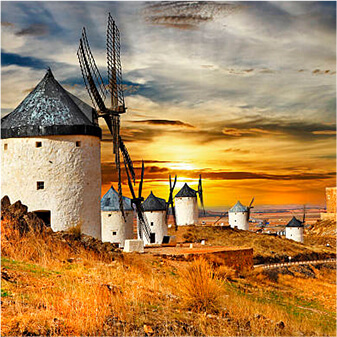
La Mancha was and continues to be the land of cheeses. Its deeply rooted livestock tradition, left a legacy which still exists today and without any doubt has given it gastronomic personality: Sheep’s milk Cheese.

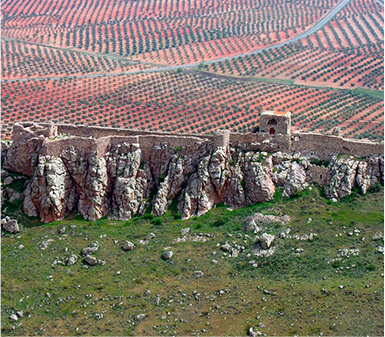
Our factory is situated in Mora, a beautiful village in the province of Toledo, within the region of LA MANCHA, next to the Montes de Toledo (Hills of Toledo).

Geographically, Mora has a privileged situation given that it is in the centre of the Iberian Peninsula, very close to the greatest Spanish thoroughfares and only 93km from Madrid.

It connects to Toledo, World Heritage City, only 30km away by la CM-42, autovia de los Viñedos ( The motorway of the Vines ). It is found close to the main tourist interest sites of the area and is therefore in an ideal place to visit Toledo and its province.

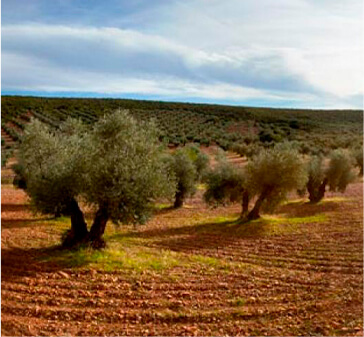
The local economy is based on agriculture and livestock farming ( sheep and goat ) and the industries derived from these activities: the production of cheese and the production of Extra Virgin Olive Oil, the most representative product of the municipality.

Our Cheeses

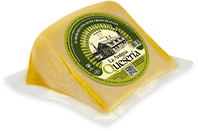
Discover the different elaborations and maturations of our cheese collection. All of them are produced with 100% raw or pasteurized sheep's milk. You can easily distinguish them by the brand and the label’s color.

Artisanal production process

The History of Cheese in the area is as old as the pig farming in this region and time has not changed the essence of the production and quality keeping its strong personality intact.

FROM THE HEART OF LA MANCHA

Join us to show you how we make our cheeses in an artisanal way, following rigorous processes, to achieve the flavor that distinguishes us.

Come visit our facilities, you can learn how cheese is made, try it in our tasting room and buy your favorite products in our store.

Clotting and curding

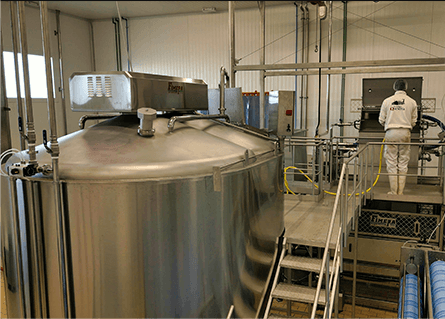
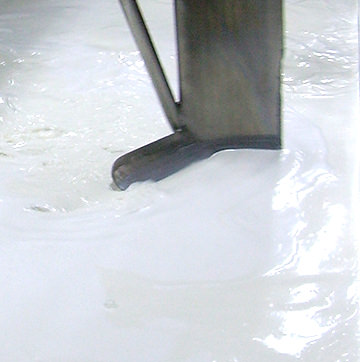
The milk is taken to the curding vats, where it is clotted using coagulating enzymes. For this process, the milk is heated to 30º C and is kept at this temperature for 45 minutes. The obtained curd is submitted to successive cuts until small grains, similar to rice, are obtained.

Dewheying the Curd

The mixture is stirred and reheated in a gradual way until it reaches 37º C, with the object of facilitating the liquid part or whey.

Moulding

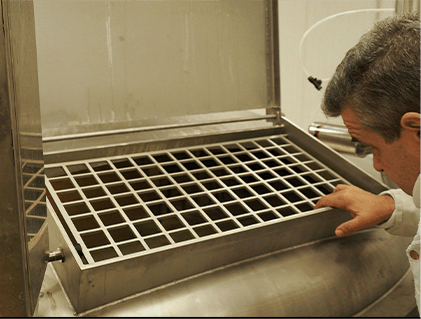
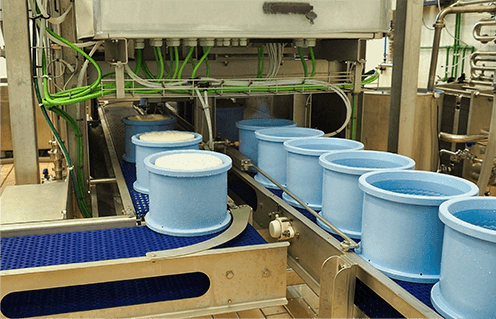
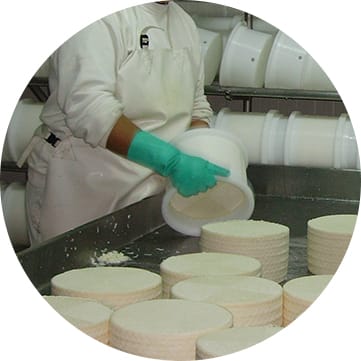
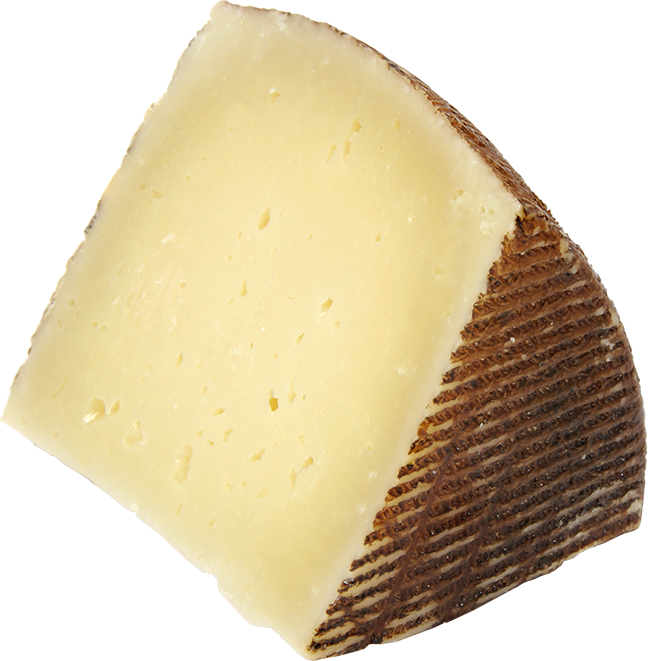
The obtained curd is placed in cylindrical moulds, which have ridges to press the “flower” in the flat faces of the cheese and on the lateral surface of the “pleat”.

Pressing

Once the curd is in the mould, it is subjected to pressing to allow the elimination of the whey from inside the paste.

Turning

After a time in pressing, the curd is removed from the mould (now that it has been given its cylindrical shape) and inverting the flat faces of the cylinder, it is returned to the press for a new pressing process.

Salting

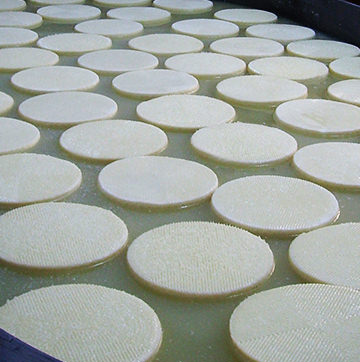
The following process is immersion salting. Sodium Chloride is used and the duration is between 24 and 48 hours.

Maturing and Drying

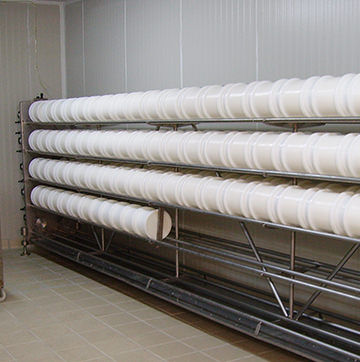
The pieces (wheels) of cheese are kept in places with an appropriate humidity to eliminate any excess water. After, they are placed into temperature and humidity controlled refrigerated rooms to allow the correct maturation of the cheese.

Conservation Advice

The upkeep and conservation of the sheep’s milk cheese requires special care to guarantee its long-lastingness and avoid the loss of any of its properties, conserving all its aroma and flavour.

Whole Pieces

Keep them in a cool dry place to not change the properties of the product, once cut, spread the cut with extra virgin olive oil to avoid it going mouldy or dry.

If it is kept in a refrigerator, it should be between 0º and 5º C. It is suggested to remove the cheese from the cold before eating to acquire the appropriate room temperature and therefore eat it with all its aroma and flavour.

Vacuum Packed

For correct storage , it should be kept between 0º and 5º C. It is best to take the bag out of the cold so that the cheese can reach room temperature and so be eaten with all its aroma and flavour.